

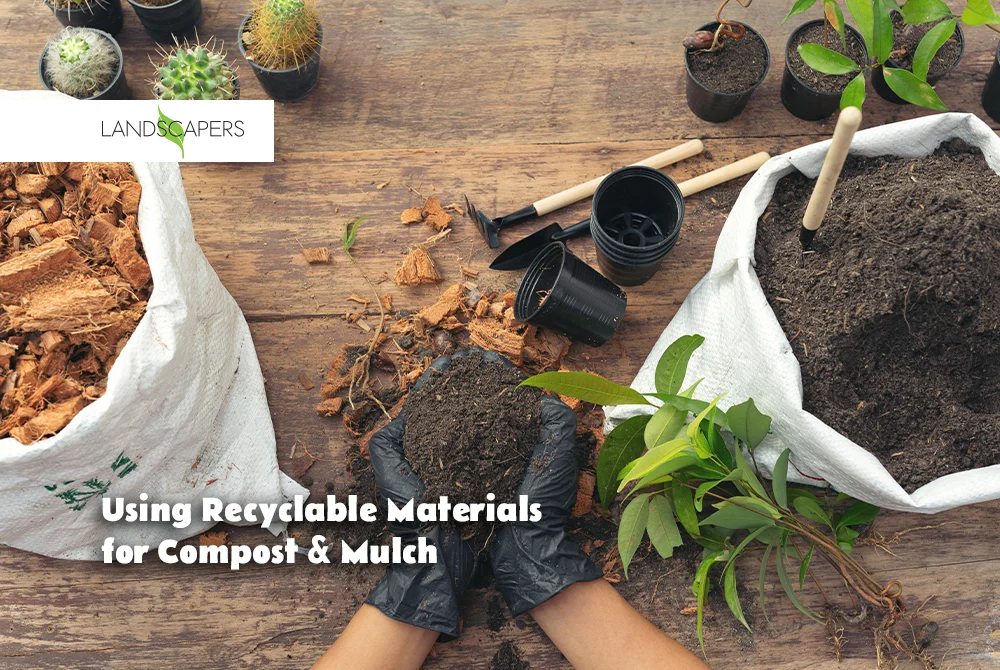
Using Recyclable Materials for Compost & Mulch
The need for sustainable landscaping is no longer a trend but a necessity. As awareness about environmental issues increases, people, including landscapers and developers, are looking to adopt intelligent ways to save resources from being wasted. One such efficient option is to use Recyclable Materials, which can be used to create compost and mulch. This option is beneficial in many ways, including conserving resources and ensuring a healthy landscape.
While designing a landscape, using materials for Landscaping that are eco-friendly and recyclable is a recommended practice in modern-day landscaping. Creating compost and mulch using recyclable materials is a very efficient option.
Why Compost and Mulch Matter in Landscaping
It is important to understand the function of compost and mulch before moving into recyclable materials for use in landscaping. Compost helps to enrich the soil by adding organic matter to it. It also helps to improve the soil composition and promote the presence of beneficial microbes. On the other hand, mulch helps to protect the surface of the soil by retaining moisture in the soil, regulating temperatures in the soil, preventing weeds from growing in the soil, and preventing soil erosion.
Recyclable Materials for Compost – A Free-Flowing Overview
- Kitchen Organic Waste
Kitchen waste is one of the simplest materials to recycle into compost. Some materials to consider include:
- Vegetable peels and leftovers
- Fruit leftovers
- Coffee grounds
- Eggshells
All these materials decompose fast and add nitrogen to the compost pile, thus speeding up the composting process.
- Yard Waste
Materials you generate from maintaining a yard can be added to the compost pile.
Common materials to consider include:
- Dry leaves
- Grass clippings
- Small twigs and branches
- Plant cuttings
All these materials help keep the composting process efficient in a Landscaping compost.
- Paper-Based Products
Some paper-based products are not waste materials in a compost pile. Some materials to consider include:
- Shredded newspaper
- Brown paper bags
- Cardboard
Recyclable Materials for Mulch
Decorating your garden with mulch made from recycled products not only enhances the aesthetic appeal of your garden, but it also helps the garden function better. Here are the most common and useful types of recycled products that can be used for mulching:
- Wood Waste
Recycled wood products are the most common and popular form of landscaping mulching materials. Recycled wood products include:
- Waste wood from construction sites
- Tree bark
- Saw dust
- Chips
Recycled wood products take a long time to degrade, and in the process, provide your garden with the required nourishment.
- Coconut Coir and Husk
If your area is in a tropical zone, then the coconut husk and coir can prove to be the most useful and effective form of garden landscaping. Coconut products have the potential to retain moisture and degrade at a constant rate.
- Recycled Green Waste Mulch
Green waste, such as trimmed branches and leaves, can also be used to produce mulching products. This way, the waste generated in the garden will be reused to produce the required materials for future gardening.
Environmental Benefits of Using Recyclable Materials
Waste Reduction
Using recyclable products reduces pressure on landfills. Organic waste, a large portion of municipal solid waste, can be turned into a useful product through composting.
Soil Health Improvement
Compost increases the number of microbes in the soil, improves air exchange, and increases the water retention capacity of the soil, all of which are important for the development of plant life.
Lower Carbon Footprint
The manufacture and transportation of artificial fertilizers and mulching products result in the emission of greenhouse gases into the atmosphere. The use of locally sourced recyclable compost and mulching products reduces the carbon footprint.
Economic Advantages
Cost Savings
Compost made from recyclable materials reduces the need to purchase fertilizer. Recyclable mulching products are cheaper than artificial products used for decoration.
Long-Term Benefits for Landscaping
Healthy soils require less watering, fewer fertilizers, and less maintenance, resulting in substantial savings in the long term, especially for large landscaping operations.
Best Practices for Using Recyclable Materials
- Balance your compost pile
Ensure a mix of green and brown materials.
- Avoid contaminated waste
Avoid composting:
- Plastic-coated papers
- Chemically treated wood
- Meat and dairy products
- Breaking down large materials
Shred large materials into smaller pieces for easier breakdown and a finer texture.
- Moisture level
Ensure your compost pile remains damp but not wet.
Role in Modern Sustainable Landscaping
In Modern Sustainable Landscaping, the discussion has changed. Today, the materials used for landscaping are not just determined by their longevity and aesthetic appeal but also by their sustainability. There are now many developers and managers who have started incorporating composting into their landscape designs to ensure that they meet their green certification requirements. The use of recyclable materials for landscaping is also in line with the circular economy concept, where waste from one process becomes the raw material for another process.
Future of Recyclable Landscaping Materials
The use of recyclable materials for landscaping is bound to increase in the future. This is because there are now stiffer environmental regulations and a heightened sense of consumer climate change awareness. Advances in bio-based mulch, recycled fiber soil enhancers, and industrial composting have made sustainable landscaping not only possible but also easy. These options are now common in urban spaces, housing communities, and commercial properties as we strive to create a greener environment.
Conclusion
The use of recyclable materials for making compost and mulch is a simple but effective step towards creating a sustainable environment. This reduces waste to useful resources, improves soil quality, reduces costs, and helps preserve the environment. As this trend continues to improve in the future, recyclable compost and mulch will be at the center of creating a greener environment and a better living space. Whether it is a personal living space or a larger landscape, the use of recyclable resources for landscaping is a smart move.