

Minimalistic Landscaping Design for Contemporary Homes
Since modern homes are tight on space, minimalistic landscaping design has gained real traction over the past few years. Minimalistic landscaping design strips away the excess, focusing on simplicity, clean lines, purposeful elements and a calm atmosphere that complements modern architecture.
In our humid, tropical climate, with its heavy rains and intense heat, the approach for landscaping design needs to be practical—low-maintenance, yet able to withstand the rigors of our weather. Homeowners today want outdoor spaces that feel like extensions of their sleek interiors: uncluttered, functional and soothing. Whether it is a small rooftop, a narrow courtyard or a modest front yard, minimalism delivers elegance while respecting local realities like water conservation and heat management.
Firstly, the core principle of minimal landscaping is based on the concept of ‘less is more.’ It means that only a limited number of materials and plants should be used. For example, only shades of gray or beige can be used with some wood finishes like teak or wood to give a touch of nature. Secondly, only geometric shapes can be used to create order and beauty in landscaping. For example, no colorful flower beds should be used because they create mess and clutter. Instead, structured designs can be used. Thirdly, sustainability is another important aspect that can go hand-in-hand with minimalistic landscaping. For example, with water problems like those faced by big cities, waterless plants can be used once they are established.
Start with clean hardscaping. A polished concrete patio or a large stone slab is the foundation. Pebble paths or decomposed granite provide texture without visual clutter. For modern homes, built-in seating is a good choice. A simple concrete bench or a wooden planter is clean and functional.
Architectural plants are the main focus. Tall, slender plants like the areca palm or the bamboo plant provide verticality without invasive growth. For ground cover plants, use those that remain tidy, like mondo grass or native ferns. Group in odd numbers (three or five) for balance, and space them generously to emphasize form over density.
A water feature or a shallow reflecting pool brings serenity without overpowering the space. In a humid climate, the soothing sound also helps to mask the sounds of the city. Choose a recirculating system to conserve water. Consider pairing it with a rainwater harvesting system.
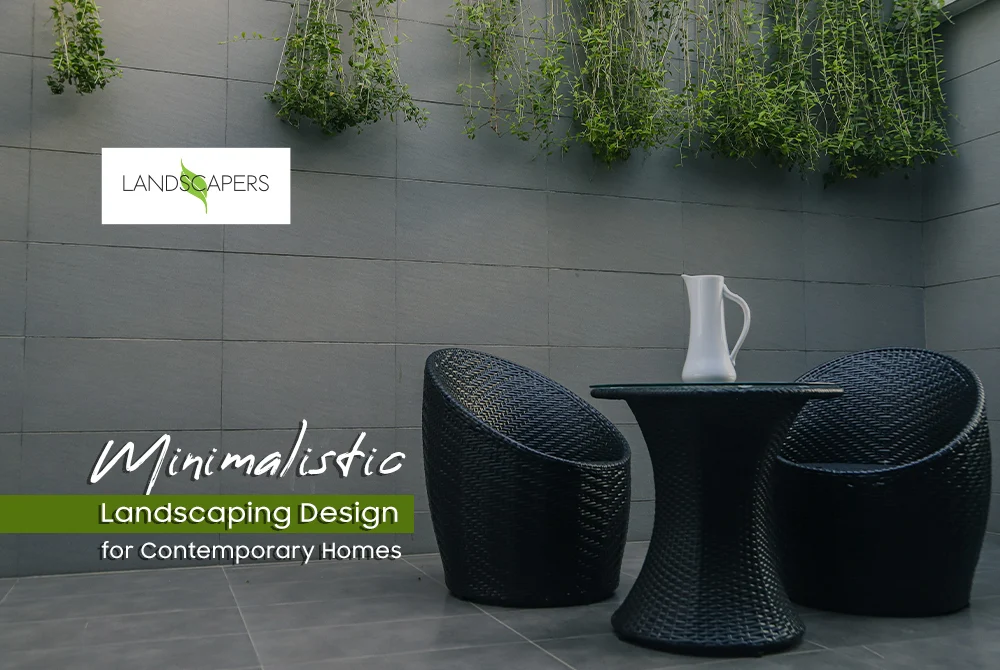
In many modern buildings, the ground level is not available for landscaping. So, go vertical. Wall planters or green walls with trailing money plant can be used to cover the walls. Rooftop gardens have become extremely popular. Simple designs with potted palms, gravel areas and shaded sitting spots transform the rooftop into a personal paradise. Add solar-powered lighting for nighttime enjoyment. Subtle up-lighting can be used to accentuate special plants or architectural elements. Warm LED lighting can be used along the pathways or under the benches. Landscaping accessories should be kept to a bare minimum. One sculptural planter or a stylish outdoor rug can be sufficient.
For monsoon season, drainage must be a priority. Keep planters elevated to avoid waterlogging. For the hot summers, the landscaping materials must be heat resistant. They must not break or crack easily. For pest management, which can be a problem with dense foliage, natural barriers can be used. For a budget-friendly landscaping project, one area can be done at a time. For example, the entrance area or the balcony can be done first. For most residents, investing in a good hardscape will prove to be cost-effective in the long run. Minimalistic landscaping does not mean a lack of ornamentation. On the contrary, it’s about the beauty of simplicity. In the fast-paced lifestyle cities, these designs provide a tranquil space for the family to relax. For children to play safely, minimalistic landscaping provides a safe space. Simple, thoughtful changes can transform even a compact plot into a serene, contemporary haven.