

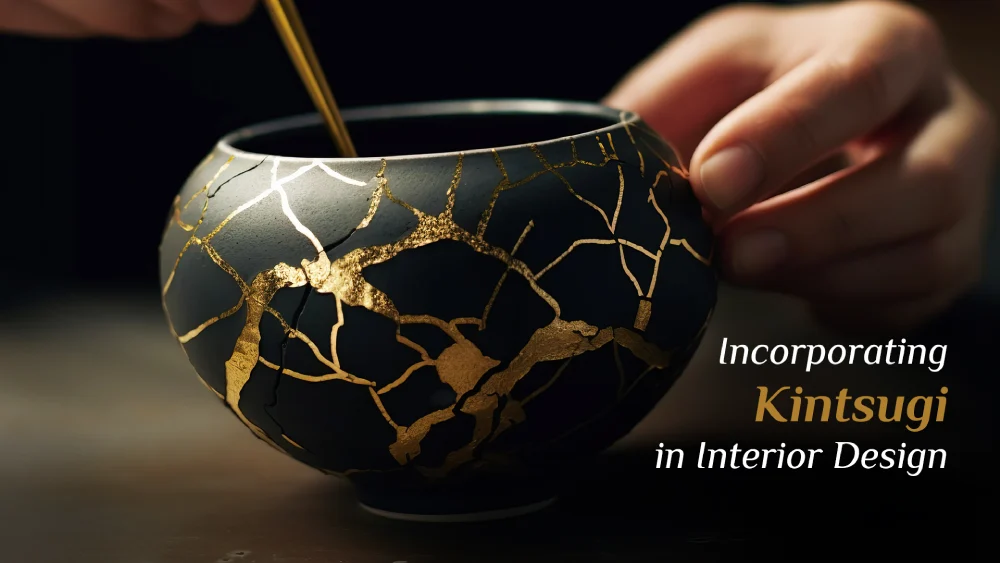
Incorporating the Philosophy of “Kintsugi” in Interior Design
Key Takeaways
- Kintsugi is a Japanese art that repairs broken pottery with precious metals like gold or silver.
- Rooted in the Wabi-Sabi aesthetic, it embraces authenticity and imperfection.
- In interior design, this philosophy creates layered, deeply personal spaces that tell a story of age and repair.
What is the Kintsugi Philosophy?
Kintsugi is the age-old Japanese art of mending broken pottery using lacquer mixed with precious metals such as gold, silver, or platinum. This craft focuses on highlighting flaws—transforming damage into something meaningful and beautiful.
At its core, Kintsugi is more of a philosophy. Rooted in the broader aesthetic of Wabi-Sabi, it embraces imperfection and authenticity. In most traditions around the world, broken things have little to no value or are often thrown away.
In interior design, this translates into spaces that feel lived-in, layered, and deeply personal rather than flawless or overly curated.
Modern design leans toward perfection—clean lines, polished finishes, and symmetry. Kintsugi challenges that mindset by asking, “What if imperfections were the highlight, not the flaw?”
Incorporating the philosophy of kintsugi allows us to tell a story of wear, age, and repair, where we can feel more human and celebrate authenticity.
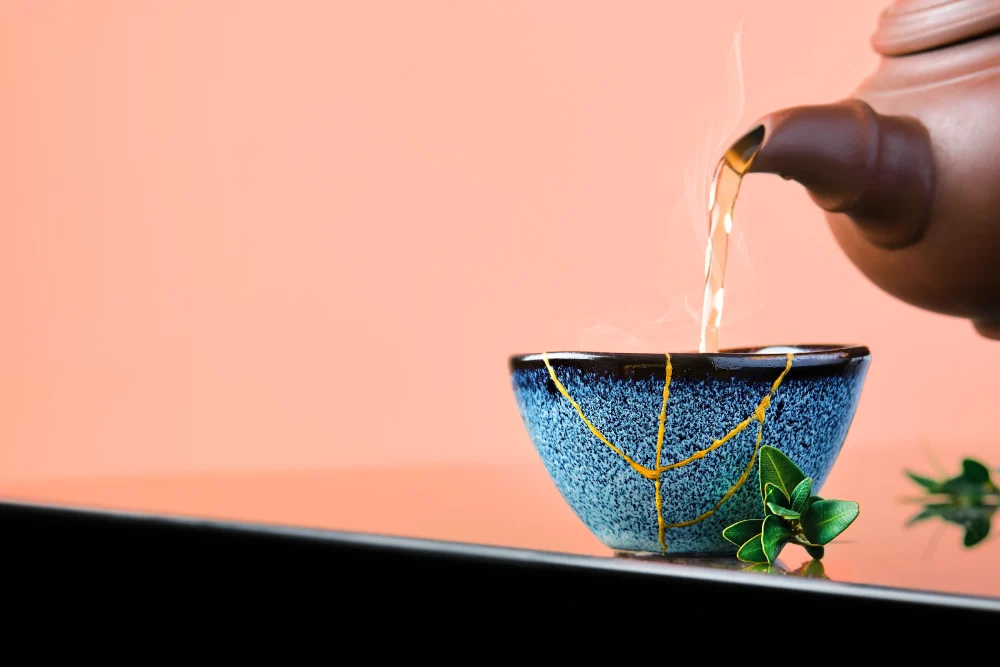
5 Ways to Blend Kintsugi and Traditional Interior Design
1. Celebrate Imperfect Materials
Choose materials that reveal their natural character, such as raw wood with visible knots & grains, stone with irregular textures, and handmade ceramics with unpolished glazing. Let the flaws speak for themselves. A cracked wooden table or a slightly uneven wall can anchor a space with warmth and honesty.
2. Repair Rather Than Replace
Kintsugi teaches us that repair adds value. In interiors, this can mean that you use fixed furniture that has metal accents or visible joins, reupholster structurally preserved chairs, or keep heirloom pieces of furniture around your home.
A repaired object carries memory, the emotional weight of which enriches your home.
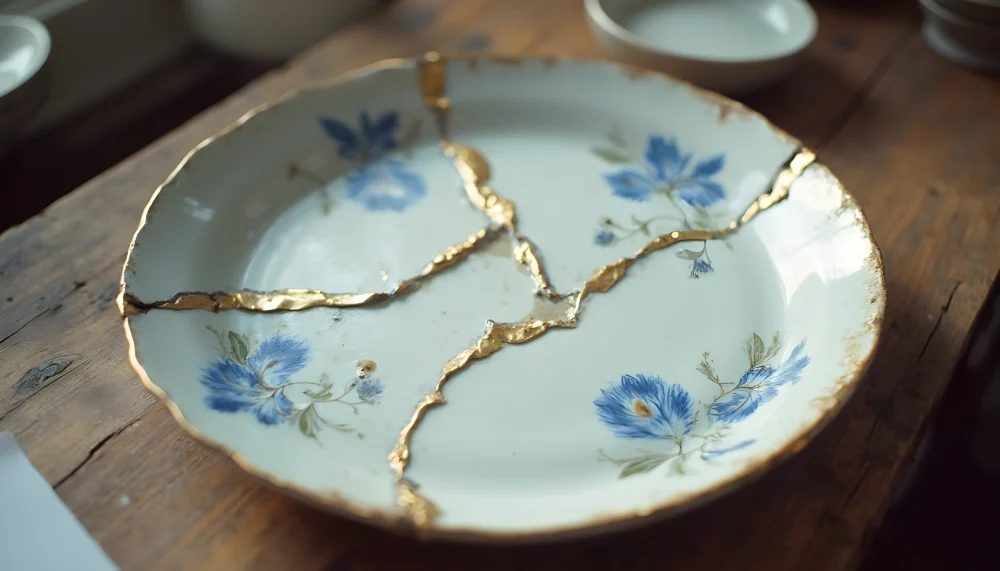
3. Layer History Into Your Space
A Kintsugi-inspired interior always evolves. Try to mix vintage finds with modern furniture, displaying heirlooms alongside contemporary pieces, or creating feature/ gallery walls that feel organic. The goal is to create a narrative, a story with continuity.
4. Gold as a Symbol
Unlike in traditional Kintsugi, the use of the same philosophy in interiors gives us some leeway. We can use gold or brass accents sparingly, and even introduce metallic trims or inlays, and combine art or decor inspired by fracture patterns. Every touch acts as a reminder that brokenness can give way to true beauty. These touches act as quiet reminders that beauty can emerge from brokenness.
5. Embrace Minimalism with Soul
Kintsugi beautifully pairs with mindful minimalism. Here, the focus is on fewer meaningful objects, neutral palettes with earthy tones, and natural light and open breathing spaces. Every item should feel completely intentional.
Incorporating Kintsugi is about shifting perspective completely, moving in a different direction altogether. Value longevity, wear, and time, designing spaces that evolve just like people. A Kintsugi-inspired home aims to connect. It reflects a life that has been lived to the fullest, with all memories and meaning.