

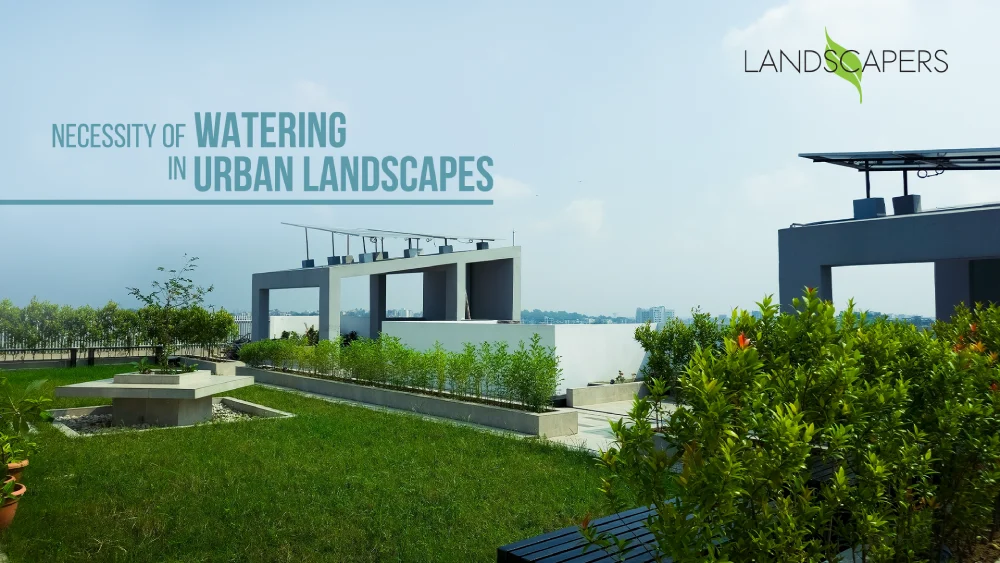
Necessity of Watering in Urban Landscapes
Key Takeaways:
- Urban Heat Islands: City environments trap heat, making consistent and strategic watering an absolute necessity for plant survival in urban landscaping.
- Water Conservation: Applying smart landscaping tips, such as drip irrigation and early morning watering, maximizes hydration while minimizing water waste.
- Property Value: Well-hydrated, vibrant green spaces significantly enhance the aesthetic appeal and value of urban properties.
The Unique Challenges of Urban Landscaping
Dhaka is perhaps the most populous city in Bangladesh. As the administrative and economic capital of our country, it is constantly being redesigned and rebuilt to meet the needs of the people, including housing and infrastructure. In such dense urban environments, landscapes such as rooftops, balconies & small courtyards serve as necessary pockets of greenery. Landscaping tips that could help you make the most of the limited greenery available to you could make your home appear more appealing to others.
Human care is a crucial component of maintaining great urban landscaping. Timely and proper watering is one of the most significant factors contributing to the good health, longevity & overall visual appeal of plants.
Urban landscapers usually face some unique challenges: not having enough soil to work with, higher temperatures, and fewer sources of natural water. Many plants used regularly to decorate landscapes require mindful & consistent watering. This factor must be followed righteously to maintain the vitality of any urban landscape.
To maintain good landscaping quality, you need to ensure the proper level of watering. Too much water, and the roots could suffocate, promoting fungal diseases and weakening plant structure.
The only way to properly maintain landscaping is to balance watering. Timing is key, as too much water can drown the roots, promote fungal diseases, and weaken the plant’s structure. Subsequently, if there is a lack of water, then the plant could face dehydration, stunted growth, and leaf drop. Aim for balance, making sure the water reaches the roots without causing waterlogging.
Efficiency and plant health are also factors to thoroughly consider before making any decision. Watering in the early morning is best since it gives plants the most time to optimally absorb any water before sunlight causes any evaporation. Watering during the evening could potentially also work, but it is better to act earlier as to prevent any future outbreaks of diseases overnight.
To make your life easier, use the proper watering setup suited for your landscaping. Drip irrigation systems are good for delivering water to the roots, minimizing overall waste. Sprinklers are effective for lawns, but might not suit smaller spaces. Manual watering allows better control, but you need to be consistent and attentive at all times. Finally, you can also use smart irrigation systems that keep track of watering cycles. This can be particularly effective for people who need their plants to be watered while they are away for prolonged periods of time.
Watering efficiency is not just a personal necessity, but also an environmental responsibility, keeping water scarcity in mind. When you use mulch to retain soil moisture, select drought-tolerant plants, and reuse water where possible, water consumption can be reduced significantly without compromising on greenery.
A well-watered landscape can elevate the environment it is in. Enhancing visual appeal & improving air quality can be some of the benefits of a well-kept landscape. A thriving landscape can also increase property value & create an inviting atmosphere.
Watering your landscaping properly is an essential element of successfully maintaining it, year after year. When you clearly understand plant needs, optimize timing, and take up efficient methods, as an urban landscaper, you then have the freedom to create sustainable & vibrant green spaces that thrive, even in a concrete structure.