

Dry vs Wet Kitchens: Trade-Offs in Modern Apartments
Key Takeaways
- Zoned Functionality: Dividing spaces into a dry vs wet kitchen in modern apartments allows homeowners to keep heavy food prep hidden while maintaining a pristine entertainment area.
- The Wet Kitchen: Designed as a heavy-cooking kitchen layout, this enclosed space houses major appliances and requires powerful chimneys for managing cooking odors and ventilation.
- The Dry Kitchen: Functioning as an open-concept dry kitchen, this area is ideal for light prep, breakfast counters, and seamlessly integrating with your dining space’s aesthetic.
The Evolution of Apartment Interior Design in Dhaka
When buying a new home, many people are attracted to modern apartments with state-of-the-art facilities. Traditional homes in Bangladesh usually had one singular kitchen, where there would be different areas designated as the wet & dry kitchens. It’s just that our grandmothers and mothers were not aware of the names of the spaces.
In the mud village houses of yore, people would have a designated corner where food would be laid out, and the entire family (usually joint and with multiple members) would sit on the floor in a row on bamboo mats to eat the three major meals of the day.

Defining the Zones: What is a Wet Kitchen vs Dry Kitchen?
Once people started moving to urban areas and investing in modern homes, they wanted a more open-concept kitchen where a portion of the area could be displayed to guests or could be used to entertain friends, family, and other loved ones. The main reason why many Southeast Asian and South Asian homes have started to separate the two zones clearly is to keep the kitchen clean & free of any mess. Another reason is that while more urban families are now nuclear, they often entertain large groups of people: friends, family, co-workers, neighbors, and the like. It helps when the apartment has an extended dry kitchen with countertops/ seating that allow guests to sit during various gatherings.
The Heavy Cooking Kitchen Layout
A wet kitchen is usually designed to handle heavier tasks like washing up (during food prep and after eating), heavy cooking & frying (oil splashes and smoke), meaning the area must not be too cluttered with unnecessary items. If there is sufficient space inside the kitchen area, you can use a divider to keep the wet kitchen completely separate from the rest of the home. This will allow you to keep clutter limited to a specific zone, while the rest of the kitchen can be maintained without any huge mess.
The Open Concept Dry Kitchen
Often, if the kitchen is open-concept and opens up into the dining space of the apartment, then people choose to design the dry kitchen area in the designated space – a modern set-up can include countertops & stools (ideal for those entertaining for brunch or breakfast), and have a separate dining table so that larger groups can be seated in different areas without causing any hullabaloo.
Key Trade-Offs and Design Considerations
Maintaining a Clean Premium Aesthetic
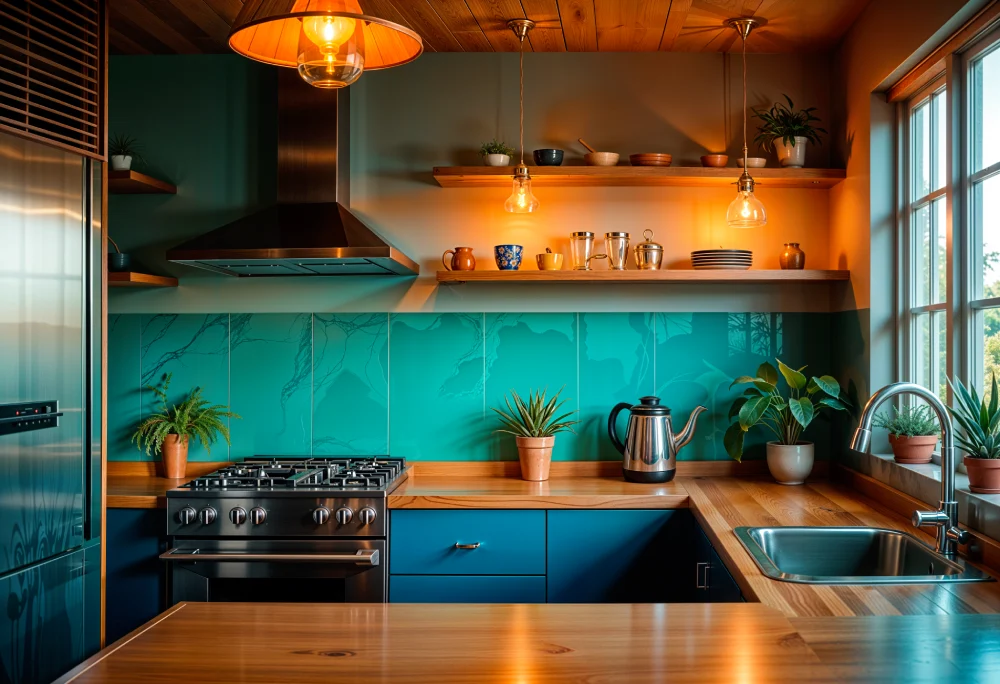
It is a good idea to use similar color tones, finishes, and materials when designing both the wet & dry kitchens to maintain a continuity of the interior design scheme. You can also choose to introduce elements of design consistent with the rest of your home. For example, if your home has lighter colored walls, pastel colored accents, and cabinetry, it could make the home seem more spacious. On the other hand, darker colored cabinetry and jewel-toned accents can give the same space a more luxe and sophisticated feel.
Marble is still the preferred choice of countertop, but granite is a close second as it is highly durable. If you like adventure and want your kitchen to look and feel more eclectic, you can use completely contrasting design styles, colors, and themes to separate the wet & dry kitchens. This will allow people to distinguish the separate zones, while also giving your home a unique edge that others simply might not possess.
Spatial Flow and Entertaining Guests
You need to keep some separation in terms of space between the dry & wet kitchens (if you have ample available square footage). However, keep in mind that too much space between the two will require you to run back and forth, which can be a complete deterrent when you are entertaining large groups of people.
The dry kitchen can have a toaster, microwave oven, and electric kettle or coffee maker. Almost all of the other appliances, including the oven, dishwasher (if any), gas stove, and refrigerator, will be kept in the wet kitchen.
Managing Cooking Odors and Ventilation
You will also need to place a hood or chimney as well to protect the walls and cabinetry from the oil fumes emanating during heavier cooking.
Keeping the wet & dry kitchens separate is not only aesthetic, but it is also functional and makes the area easier to maintain and clean regularly. A well-kept kitchen is, after all, a reflection of the homeowner’s personality, and wet/dry kitchens help you incorporate your modern lifestyle into your perfect home.